Spinal Decompression Therapy: Process, Commitment, and Alternatives
Spinal decompression therapy is a non-surgical option that may suit some disc-related pain, while surgery may be needed for serious nerve problems or failed conservative care. Arrowhead Clinic Chiropractor Decatur explains the evaluation, commitment, cost drivers, and decision points without treating either option as right for everyone.
Request an EstimateOptions at a Glance
Spinal decompression and spine surgery address different care needs. Your symptoms, examination findings, and goals help determine which path deserves consideration.
- Spinal decompression therapy: Best suited to people exploring structured non-surgical care for selected disc-related pain.
- Spine surgery: Best suited to people with serious nerve compression, spinal instability, or symptoms that need operative care.
How Does Spinal Decompression Compare With Surgery?
Spinal decompression therapy is less invasive and focuses on a structured conservative plan, while surgery changes spinal anatomy and may be considered when serious nerve pressure or failed non-surgical care requires it.
The best choice depends on the diagnosis and safety concerns. Cost drivers, treatment commitment, maintenance needs, and patient suitability also matter.
| Factor | Spinal Decompression Therapy | Spine Surgery | Best Fit |
|---|---|---|---|
| Cost drivers | Clinical assessment, treatment plan, equipment use, and visit needs | Surgical assessment, facility care, procedure type, and recovery planning | The option that matches the diagnosis and care goals |
| Treatment timeline | A planned course with progress checks and response-based changes | A procedure followed by surgical recovery planning | The path that supports safe functional improvement |
| Maintenance | May include home activity and maintenance care when appropriate | May include follow-up care and activity limits after surgery | Your long-term needs and treatment response |
| Patient suitability | Selected disc-related pain without urgent warning signs | Serious nerve problems or conditions needing operative treatment | Examination findings and medical guidance |
What Is Spinal Decompression Therapy?
Spinal decompression therapy is a non-surgical treatment that uses controlled traction to reduce stress around selected spinal structures. The goal is to support comfort and movement when an intervertebral disc may contribute to symptoms.
A herniated disc can irritate nearby tissue and contribute to sciatica, back pain, or leg pain. We use a clinical evaluation to decide whether spinal traction and a decompression table fit your condition.
Spinal pressure can come from several causes, so decompression isn't appropriate for every person. We connect the treatment choice to your pain pattern, neurological findings, and functional limits.
Our Spinal Decompression Therapy service follows that evaluation-first approach.
What Happens During a Spinal Decompression Program?
Spinal decompression programs begin with a health history and physical examination. Arrowhead Clinic Chiropractor Decatur uses those findings to build a treatment plan that matches your symptoms and goals.
What Commitment Does Spinal Decompression Require?
Spinal decompression requires consistent visits and active participation, but the exact program depends on the condition, examination findings, and response to care.
Your treatment schedule and session frequency depend on the treatment plan. Home activity, symptom tracking, and honest feedback help us judge whether care is supporting functional improvement.
Maintenance care may be discussed when symptoms improve or when your daily demands continue to stress the spine. We adjust care when the treatment response does not match the plan.
Why Do People Choose Spinal Decompression?
People choose spinal decompression when they want a structured non-surgical treatment approach for selected disc-related pain.
Spinal decompression isn't a universal substitute for surgery. We use examination findings and treatment response to decide whether continuing makes sense.
Why Do People Choose Spine Surgery?
People choose spine surgery when medical evaluation shows a condition that may need operative treatment. Spine surgery can be considered when nerve compression, spinal instability, or progressive neurological symptoms create serious concerns.
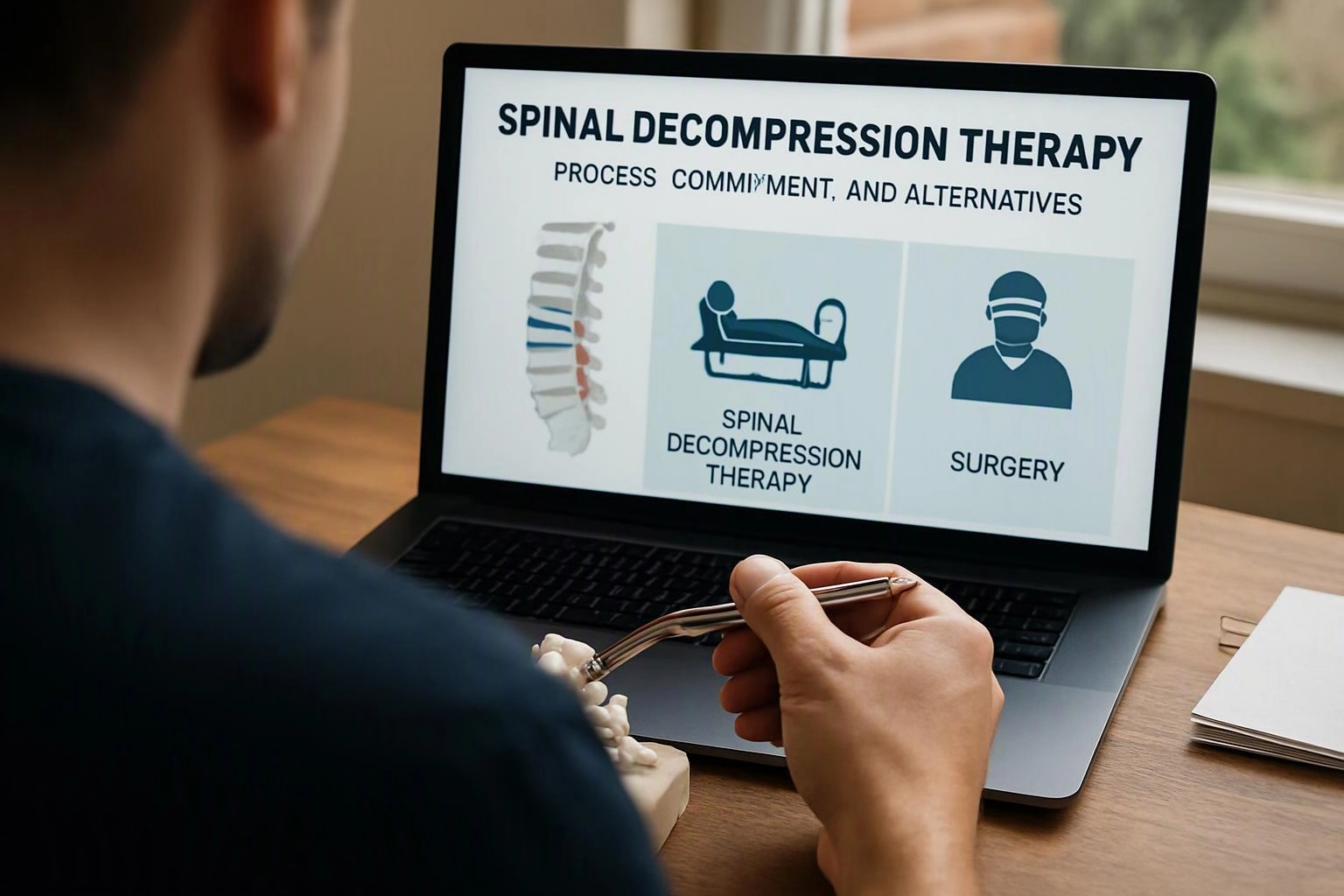
Surgical decisions should include a clear diagnosis, expected benefits, surgical risks, and recovery planning. We respect surgical consultation when the examination or symptom pattern points beyond conservative care.
When May Spinal Decompression Be a Better Fit?
Spinal decompression may be a better fit when conservative treatment is reasonable and symptoms do not show urgent warning signs.
We don't use symptom labels alone to approve care. We review the full clinical picture before recommending a treatment plan.
What Alternatives Should You Consider?
Alternatives include chiropractic care, physical therapy, exercise therapy, medication, injection, and surgical consultation. Each option has a different role, level of commitment, and safety profile.
Chiropractic care and exercise therapy may focus on movement, strength, and function. Medication or injection may be discussed through medical care when symptom control requires another approach.
A surgical consultation can clarify whether nerve compression or structural problems need operative treatment. We can help you understand where conservative care may fit within that larger decision.
How Do You Decide Between Decompression and Surgery?
The choice depends on the diagnosis, nerve findings, symptoms, function, previous care, and medical guidance rather than the treatment label alone.
What Does Spinal Decompression Treatment Cost?
Spinal decompression cost depends on the evaluation, treatment plan, visit needs, and care goals, so we explain the plan and upfront pricing before care begins.
Important cost drivers include the clinical assessment, equipment use, care duration, and the number of visits in the proposed plan. Free Consultations give you a way to discuss your symptoms and understand what the evaluation covers.
We provide a clear explanation of recommended care before treatment starts. Exact pricing comes from the plan created after your clinical evaluation.
What Warning Signs Need Medical Attention?
Progressive weakness, loss of bladder control, loss of bowel control, saddle numbness, and severe neurological symptoms need urgent medical evaluation.
These red flag symptoms can signal serious nerve involvement. We don't treat urgent neurological problems as routine decompression cases.
Seek urgent medical care when these warning signs appear or worsen. Bring information about symptom changes, previous treatment, and imaging to the medical evaluation.
Questions About Decompression and Surgery
Is spinal decompression worth considering before surgery?
Yes, spinal decompression may be worth considering before surgery when examination findings support conservative care and no urgent warning signs are present. Arrowhead Clinic Chiropractor Decatur reviews your symptoms, neurological findings, and previous treatment before discussing whether it fits.
Can spinal decompression help a herniated disc?
Yes, spinal decompression may help some people with herniated disc symptoms, but suitability depends on the clinical evaluation. Treatment response, pain pattern, nerve findings, and functional limits guide the plan.
Can spinal decompression replace spine surgery?
No, spinal decompression cannot replace spine surgery for every condition. Surgery may be needed for serious nerve compression, spinal instability, progressive neurological symptoms, or failed non-surgical care.
What symptoms mean spinal decompression may not be appropriate?
Progressive weakness, loss of bladder control, loss of bowel control, saddle numbness, and severe neurological symptoms may make spinal decompression inappropriate. These symptoms require urgent medical evaluation.
What should I bring to a spinal decompression consultation?
Bring a list of symptoms, previous treatment details, current medications, and available imaging reports. These details help us understand your pain pattern and discuss an appropriate treatment plan.
How We Approach Your Next Step
Arrowhead Clinic Chiropractor Decatur starts with a clinical evaluation before recommending decompression care. We explain the findings, treatment commitment, cost drivers, and safety boundaries in clear terms.
Contact us to discuss your back pain, leg pain, or sciatica and determine whether a conservative plan is appropriate.
Get a Free Estimate