A Checklist for Sciatica Symptoms and Warning Signs
Sciatica symptoms can include pain, tingling, numbness, or weakness along one leg. Seek immediate medical care for bowel or bladder changes, saddle numbness, or worsening weakness; Arrowhead Clinic Chiropractor Decatur can review non-emergency symptoms during Free Consultations.
Request an EstimateWhat Sciatica Symptoms Can Feel Like?
Sciatica is nerve-related pain that follows the sciatic nerve from the lower back toward the leg and foot. The nerve can become irritated near the lumbar spine, causing symptoms along its path.
Common symptoms include lower back pain, buttock pain, and leg pain. Some people describe shooting pain, burning pain, or pain that travels down the thigh and calf.
Tingling may feel like pins and needles. Numbness can affect the leg, foot, or toes, while weakness may make the leg harder to move or support.
Sciatica often affects one side, but symptoms can vary. Our team reviews the full pattern because symptom location can help guide a safe healthcare evaluation.
Before You Decide How to Respond to Symptoms
Before choosing your next step, record what you feel and how the symptoms change. These notes help our team understand possible nerve irritation and movement limits.
Use the checklist below to organize the main details. Bring these notes to a medical evaluation or chiropractic assessment.
What to Notice During a Sciatica Flare
Radiating pain often changes with body position and movement. Pain may travel farther down the leg when the irritated nerve is placed under more stress.
Notice whether sitting, standing, or walking changes the symptoms. Also record pain with movement, pain when coughing, or pain when sneezing.
Our team uses these details with your health history to understand the pattern. You can learn more about our Sciatica Treatment approach before arranging care.
Use This Symptom Checklist During a Flare
A clear symptom record shows how severe the flare feels and whether it is progressing. Write simple notes that you can review later.
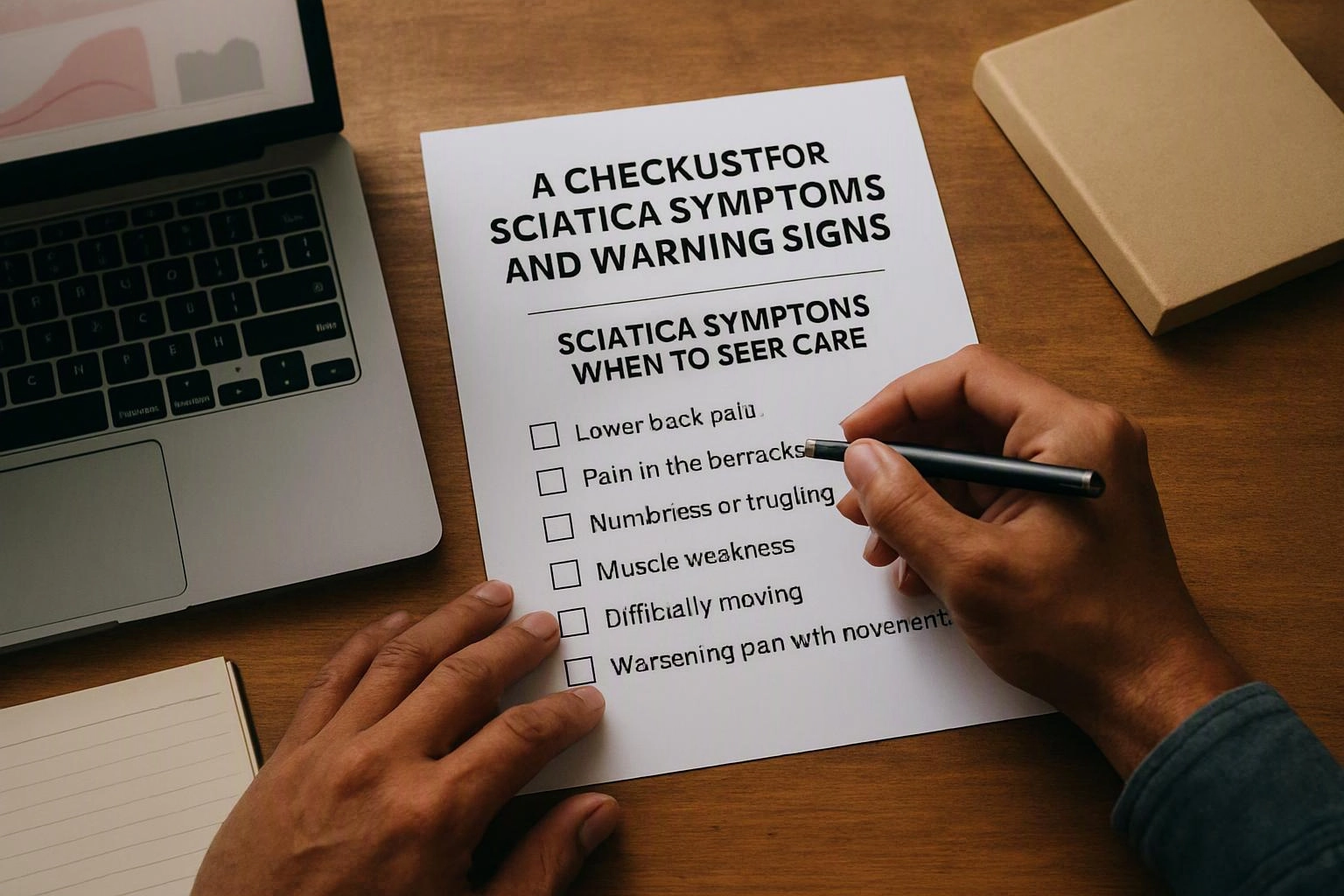
Use the following list during the flare, then share important changes during your healthcare evaluation.
Warning Signs That Need Immediate Medical Care
Sciatica symptoms need immediate medical care when they include new bowel or bladder changes, numbness around the inner thighs, worsening weakness, or serious illness signs.
These warning signs can point to a serious neurologic problem or another condition that needs urgent care. Do not wait for routine chiropractic care when these symptoms appear.
After You Record Your Sciatica Symptoms
A symptom diary gives your healthcare team a clearer view of symptom progression. Include your medical history, current medicines, and previous injuries.
Bring the diary to a healthcare evaluation so the clinician can review the full picture. Our team also asks about daily movement, related conditions, and changes in strength or sensation.
After the Flare: Steps for Planning Care
After a flare, your symptom notes can help guide the next decision. Care should match the severity, pattern, and changes you recorded.
We use a structured review to decide whether chiropractic care fits your needs. We also help identify when another medical evaluation is more appropriate.
When Should You Seek Care for Sciatica Symptoms?
You should seek immediate medical care for emergency warning signs, and you should arrange an evaluation when symptoms persist, worsen, or limit normal movement.
Urgent medical care is the right choice for bowel or bladder changes, saddle numbness, progressive weakness, serious injury, or fever. These symptoms require prompt medical attention.
Routine evaluation can help when leg pain, tingling, numbness, or weakness continues without emergency warning signs. Arrowhead Clinic Chiropractor Decatur can review non-emergency symptoms and explain whether chiropractic care may fit your needs.
Contact our team through our contact page to discuss your symptoms and next steps.
Arrowhead Clinic Chiropractor Decatur is ready to help you review non-emergency sciatica concerns.
Get a Free Estimate