Spinal Decompression Therapy: How It Works, Options, and Evidence
Spinal decompression therapy uses controlled unloading or surgical pressure relief for selected spinal conditions, but evidence varies by type and diagnosis. Arrowhead Clinic Chiropractor Decatur explains traction-based care, reviews safety factors, and helps patients decide whether nonsurgical care fits their symptoms.
Request an Estimate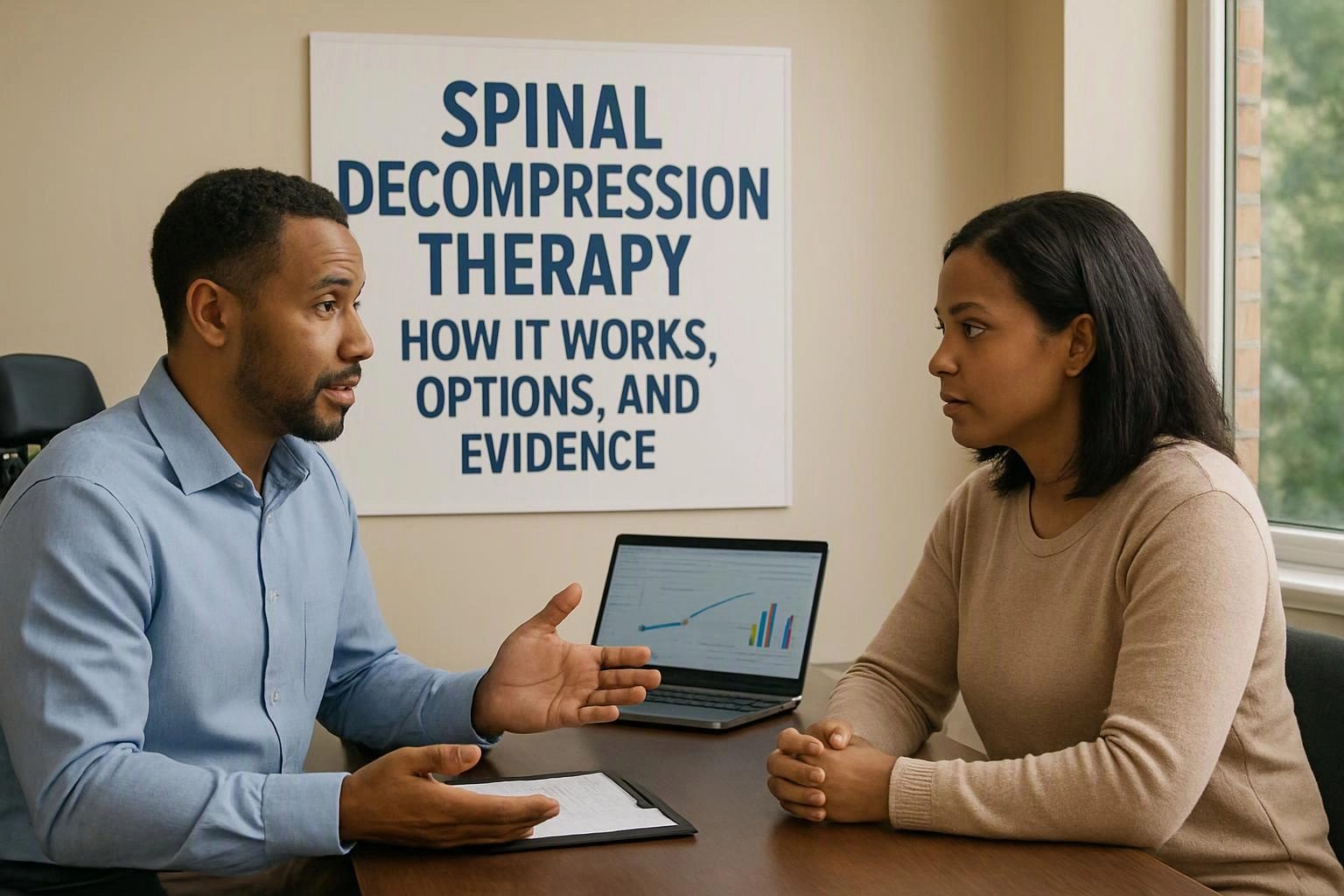
What Is Spinal Decompression Therapy?
Spinal decompression therapy is a group of treatments that aims to reduce pressure or improve movement around affected spinal structures.
These treatments may affect the space around spinal nerves, intervertebral discs, and nearby joints. The goal is to address spinal pressure linked with disc-related symptoms, nerve compression, or restricted movement.
We first match the treatment approach to your symptoms, medical history, and physical examination. Our Spinal Decompression Therapy service focuses on careful screening before nonsurgical care begins.
Which Spinal Decompression Options Are Available?
Spinal decompression options differ in how they unload the spine, who delivers them, and how strong the supporting evidence is. We compare the options by treatment goals, safety concerns, and likely fit.
Options at a Glance
| Type | Key Features | Cost | Best For |
|---|---|---|---|
| Mechanical traction | Uses a traction table and controlled pulling force. | Varies | Selected mechanical symptoms |
| Motorized spinal decompression | Uses computer-controlled traction and intermittent unloading. | Varies | Selected disc-related symptoms |
| Manual therapy | Uses hands-on mobilization and soft-tissue care. | Varies | Movement restrictions |
| Inversion therapy | Uses gravity-assisted positioning. | Varies | Limited cases after safety review |
| Surgical decompression | Removes or changes tissue that compresses neural structures. | Varies | Serious or confirmed compression |
Mechanical Traction
Mechanical traction is a treatment that uses a traction table to apply a controlled pulling force to the spine.
We may consider it when the examination suggests that unloading could support comfort or spinal range of motion. We stop or adjust care when the treatment response does not support continued use.
Motorized Spinal Decompression
Motorized spinal decompression is a treatment that uses a motorized decompression table for computer-controlled traction.
The table can provide intermittent unloading while patient positioning targets the relevant spinal region. We select the settings from the clinical findings and monitor symptom response during care.
Manual Spinal Decompression and Mobilization
Manual therapy is a treatment that uses hands-on spinal mobilization and soft-tissue techniques.
We may use manual care when joint movement or soft tissue contributes to the symptoms. This approach can support a broader plan for low back pain, but it does not directly treat every cause of nerve compression.
Inversion Therapy
Inversion therapy is a treatment that uses an inversion table to create gravity-assisted traction.
Blood pressure, balance, dizziness, and other safety factors can change whether inversion is reasonable. We review these concerns before recommending any gravity-assisted approach.
Surgical Spinal Decompression
Surgical decompression is a procedure that removes or reshapes tissue to relieve pressure on the spinal cord or a nerve root.
Laminectomy, discectomy, and foraminotomy are examples of surgical procedures. We do not treat urgent surgical conditions with table-based care, and we help identify when medical escalation is needed.
How Does a Spinal Decompression Table Work?
A spinal decompression table positions the patient and applies controlled, adjustable traction to the targeted spinal area.
Our team uses the treatment assessment and symptom response to guide each decision. A table-based approach is not appropriate for every diagnosis.
Is Spinal Decompression the Same as Traction?
No. Traction is a force-based technique, while spinal decompression is a broader term for several unloading approaches.
Intermittent traction applies and releases force during treatment. Continuous traction applies a steadier force. The right choice depends on treatment goals, examination findings, and symptom response.
What Does the Evidence Say About Spinal Decompression Therapy?
Evidence for spinal decompression therapy is mixed, so treatment value depends on the diagnosis, method used, comparison treatment, and patient response.
Clinical evidence may support traction for some forms of low back pain or sciatica, but results are not uniform. A systematic review can combine studies, yet study methods and patient groups may differ.
We explain evidence quality without treating every traction-based treatment as equivalent. We also track treatment outcomes and change the plan when the response does not match the goal.
When Might Spinal Decompression Be a Reasonable Option?
Spinal decompression may be considered when symptoms suggest a mechanical spinal problem and examination supports a nonsurgical plan.
Possible examples include selected cases of sciatica, herniated disc symptoms, disc degeneration, or mechanical back pain. We use the clinical examination to check whether the symptoms fit a decompression approach.
Treatment goals also matter. Some patients seek symptom relief, while others want better movement or support for a broader nonsurgical care plan.
When Should Spinal Decompression Be Avoided or Escalated?
Spinal decompression should not delay urgent medical assessment when serious neurological or systemic warning signs are present.
Our team screens for red flags before selecting treatment. Seek urgent medical care when symptoms suggest a condition that table-based care cannot safely address.
How We Decide Whether Nonsurgical Decompression Fits
We decide whether nonsurgical decompression fits by matching examination findings and treatment goals to the suspected spinal condition.
Our team reviews the patient history, physical examination, neurological screening, and any relevant imaging. We also check contraindications that could make traction unsafe or poorly suited.
Imaging can help explain a structural finding, but it does not replace a clinical examination. We use the full picture to build a treatment plan and reassess its value.
What Changes the Cost of Spinal Decompression Treatment?
Spinal decompression cost varies with the treatment type, clinical needs, visit plan, and coverage details; we explain the expected services during a Free Consultation.
Treatment type, clinical assessment, treatment complexity, and the number of visits can affect the overall cost. Insurance coverage may also depend on the plan and the service being considered.
We explain what the proposed care includes and how to obtain an exact quote before treatment decisions are made.
What Should You Ask Before Choosing Decompression Therapy?
Before choosing decompression therapy, ask how the diagnosis, goals, evidence, risks, and alternatives shape the care plan.
Clear answers help you compare treatment options without assuming that every decompression method works the same way.
Questions About Spinal Decompression Therapy
Can spinal decompression help a herniated disc?
Arrowhead Clinic Chiropractor Decatur may consider nonsurgical decompression for selected herniated disc symptoms after an examination. Treatment fit depends on nerve findings, symptom severity, and the absence of neurological warning signs.
Can spinal decompression help sciatica?
Spinal decompression may help selected sciatica cases when examination findings support a mechanical cause. We screen for progressive weakness, severe neurological symptoms, and other red flags first.
What are the risks of spinal decompression therapy?
Spinal decompression therapy can cause temporary symptom changes or may be unsuitable for certain conditions. We review contraindications, monitor treatment response, and stop or change care when findings call for it.
Who should not use a spinal decompression table?
Arrowhead Clinic Chiropractor Decatur does not use a spinal decompression table when warning signs, contraindications, or the suspected condition make traction inappropriate. Urgent neurological or systemic symptoms need medical assessment first.
Does spinal decompression replace surgery?
No. Spinal decompression does not replace surgery when confirmed spinal cord compression, serious nerve root compression, or other urgent findings require surgical care.
Arrowhead Clinic Chiropractor Decatur can review your symptoms, examine your spine, and explain whether nonsurgical decompression fits your goals. Contact us to discuss the next step in your care.
Get a Free Estimate