A Checklist for Herniated Disc Symptoms and Your Next Steps
Herniated disc symptoms may include back or neck pain, numbness, tingling, or weakness that travels into an arm or leg. Arrowhead Clinic Chiropractor Decatur uses your symptoms, history, and examination findings to guide appropriate next steps.
Request an Estimate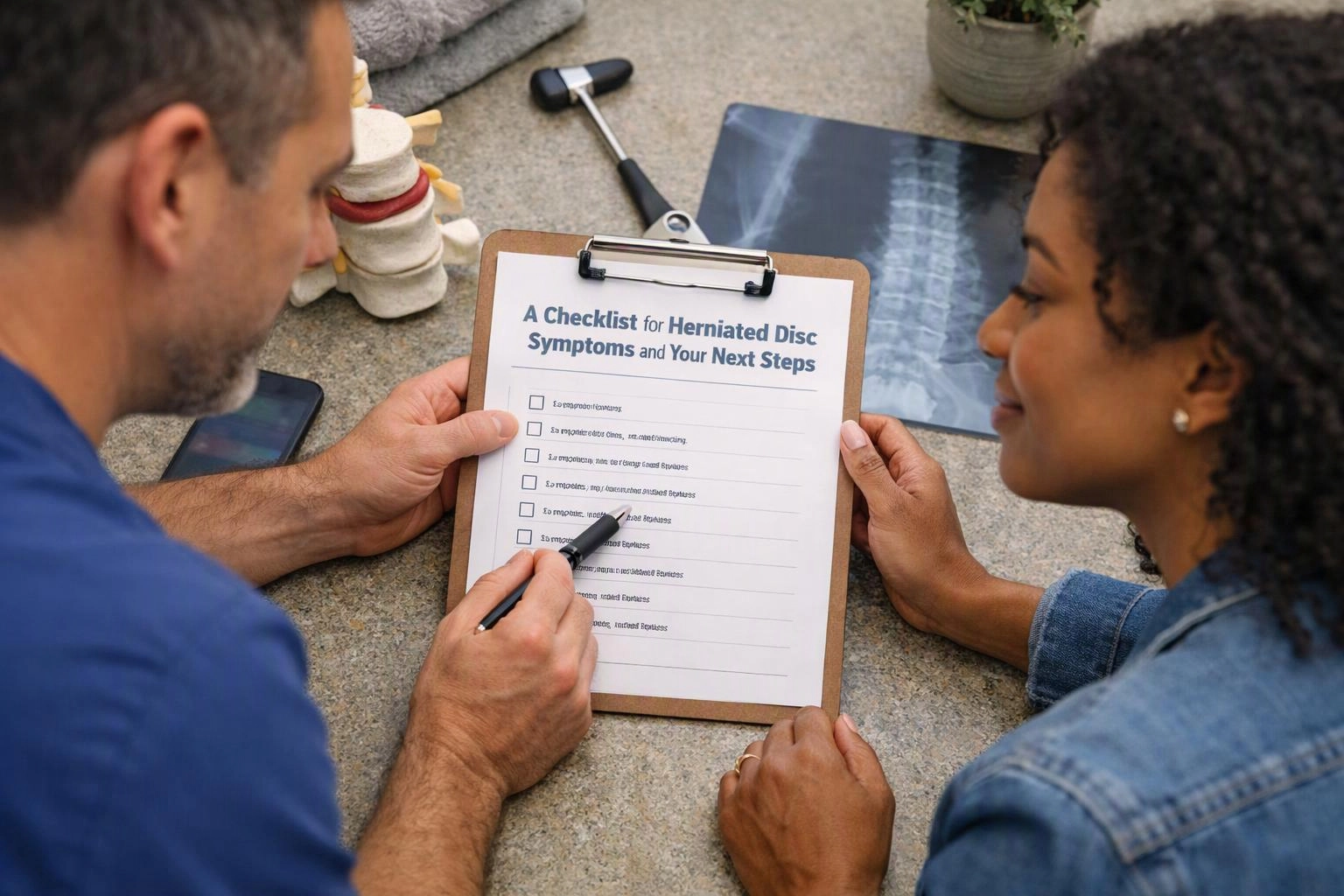
What Symptoms Can a Herniated Disc Cause?
A herniated disc can cause local spine pain and nerve symptoms that travel into an arm or leg. The spinal disc sits between vertebrae and helps absorb movement.
A disc herniation can irritate or press on a nerve root. This may cause back pain, neck pain, or radiating pain. Lower spine irritation may cause sciatica or lumbar radiculopathy, including pain down the leg. Upper spine irritation may cause cervical radiculopathy, including pain into the arm.
Numbness and tingling can signal changes in sensation. Muscle weakness or reduced strength can affect walking, lifting, gripping, or balance. A bulging disc, slipped disc, or pinched nerve can create similar symptoms, so we use your symptom history and examination findings to guide the next step.
Check for Warning Signs That Need Prompt Medical Attention
Red flags can signal a serious nerve problem that needs prompt medical attention. We don't treat these symptoms as routine soreness.
Seek urgent medical evaluation when symptoms are sudden, severe, or getting worse. Our team can help you understand when a medical referral is needed.
These warning signs need medical attention before routine chiropractic care. Contact emergency services or seek urgent care when symptoms are severe or rapidly changing.
Before Your Appointment: Record Your Symptoms
A symptom diary helps us connect your pain pattern with daily activities. Bring clear notes about when symptoms started and how they change.
Use the checklist below before your visit. Your notes can also help us identify changes that need medical referral.
Bring your symptom diary even if symptoms have improved. A changing pattern can affect the examination and care plan.
What to Bring and Discuss at Your First Visit
Your first visit should include a clear review of your medical history and current symptoms. Bring a medication list, prior imaging, and records of previous treatment when available.
Tell our team about any injury history, surgery, health conditions, or changes in activity. Discuss your health goals, such as moving with less pain, improving function, or returning to a certain activity.
Your records help us understand the full picture. We use them with your examination findings to decide whether Herniated Disc Treatment fits your needs.
During the Visit: What We Check
An orthopedic examination and neurological examination help us assess how your spine and nerves are working. We compare your symptoms with physical findings before discussing care options.
Our team explains each part of the evaluation in clear terms. The process may include the following checks.
We may recommend further evaluation when findings do not match routine mechanical pain. A medical referral can help rule out conditions that need different care.
How Herniated Disc Treatment Fits Your Findings
Herniated disc treatment should match your symptoms, examination findings, and care goals identified during the evaluation. We consider symptom location, nerve findings, movement limits, and your response to care.
Conservative care may focus on reducing irritation and improving safe movement. Spinal decompression therapy may be discussed when it fits the examination and treatment goals. We explain the expected care process and how symptom response will guide future decisions.
Some findings call for clinical referral before treatment continues. Our team will explain that recommendation and help you understand the next step.
After Your Visit: Follow the Care Plan
A care plan gives you clear direction after the evaluation. Follow the activity guidance we provide, and tell us about changes between visits.
Use the steps below to track progress and keep decisions tied to your symptoms. We adjust care when your treatment response or examination findings change.
Improvement and worsening symptoms both provide useful information. We use that information to keep the care plan focused and safe.
How We Explain Consultation and Treatment Costs
Free Consultations are available, and treatment costs depend on the evaluation, recommended care, and services included in the plan. The consultation scope may include a discussion of your symptoms, history, and goals.
We explain how examination findings affect treatment options and the care plan. Request an exact quote through our contact page so we can review the services your plan includes.
Questions to Ask Before Starting Care
Good questions help you understand the reason for each recommended step. Ask our team to connect the treatment goals with your examination findings.
Use these questions during your consultation so you can make an informed care decision.
Clear answers can help you understand your options and next steps. We will explain when continued care or medical referral is appropriate.
Questions About Herniated Disc Symptoms and Care
Can a herniated disc cause pain down the leg or arm?
Yes, a herniated disc can cause pain down the leg or into the arm when a nerve root is irritated. Arrowhead Clinic Chiropractor Decatur reviews the symptom pattern, sensation, strength, and examination findings to guide the next step.
What should I bring to an appointment for suspected disc herniation?
Bring your medical history, medication list, prior imaging, previous treatment details, injury history, and symptom diary. These details help us understand your symptoms and prepare a focused examination.
How is a herniated disc evaluated?
A herniated disc is evaluated through your symptom history, physical examination, movement checks, nerve testing, and review of prior imaging when available. We use the combined findings to discuss appropriate care or referral.
When should disc symptoms be referred for medical care?
Disc symptoms should be referred for medical care when progressive weakness, loss of bladder or bowel control, saddle numbness, or other serious warning signs appear. We also recommend medical referral when the examination shows a concern outside routine conservative care.
Herniated disc symptoms can change, so a careful evaluation matters. Arrowhead Clinic Chiropractor Decatur can review your history, examination findings, and goals, then explain appropriate next steps.
Contact Arrowhead Clinic Chiropractor Decatur about your symptoms
Related Resources
How to Check Chiropractic Insurance Coverage Before You Book
Types & CategoriesChiropractic Tools and Tables: What They’re Used For
Compared ToSpinal Decompression Therapy: Process, Commitment, and Alternatives
Types & CategoriesSpinal Decompression Therapy: How It Works, Options, and Evidence