Chiropractic Adjustments: Potential Benefits, Side Effects, and Safety
Chiropractic adjustments may help some people with pain and movement, but benefits and risks depend on the condition, technique, and health history. Arrowhead Clinic Chiropractor Decatur reviews those factors before recommending care.
Request an EstimateWhat Is a Chiropractic Adjustment?
Chiropractic adjustment is a manual therapy that applies controlled movement to a spine or joint. The goal is to support joint mobility and improve range of motion when care is suitable.
The spine contains vertebrae, joints, muscles, and ligaments that work together during movement. We review how these areas move before choosing an adjustment technique.
A spinal adjustment can be part of conservative care for selected musculoskeletal concerns. Our team also discusses your symptoms, treatment goals, and health history before care begins.
Learn more about our Chiropractic Adjustment service and how we review treatment options.
Which Chiropractic Adjustment Types May Be Used?
Chiropractic adjustment types differ by force, movement, equipment, and patient needs, so the appropriate option depends on the assessment.
We match the adjustment technique to your symptoms, comfort, movement findings, and treatment plan. Cost can also vary with the adjustment type, assessment needs, and care complexity.
| Type | Key Features | Cost | Best For |
|---|---|---|---|
| Manual adjustment | Hand-applied controlled force | Varies | Selected spinal joint mobility concerns |
| Instrument-assisted adjustment | Handheld instrument and targeted force | Varies | Targeted contact needs |
| Activator adjustment | Low-force contact with an Activator instrument | Varies | Patient preference for low-force care |
| Drop-table adjustment | Table section supports controlled movement | Varies | Selected spinal regions |
| Flexion-distraction | Guided spinal movement on a treatment table | Varies | Selected lower back care plans |
| Spinal mobilization | Gentle movement with attention to soft tissue | Varies | Gentle range of motion work |
Manual Chiropractic Adjustments
Manual adjustment is a hands-on technique that uses controlled force around a spinal joint. The movement may support joint mobility when the assessment supports this approach.
We use the findings from your screening to decide whether manual therapy fits your needs. Comfort, symptoms, and treatment goals guide the best-fit choice.
Instrument-Assisted Adjustments
Instrument-assisted adjustment uses a handheld instrument to apply targeted force near a spinal joint. This approach can offer a focused contact point during care.
Our team considers your symptoms and comfort before using an instrument-assisted adjustment. We explain the technique so you can make an informed choice.
Activator Adjustments
Activator adjustment is a low-force technique that uses an Activator instrument at a targeted contact point. The method may suit people who prefer a lighter approach.
We review your movement findings and patient preference before selecting this technique. The adjustment still needs to fit your health history and treatment goals.
Drop-Table Adjustments
Drop-table adjustment uses a table section that moves in a controlled way as the spinal region is addressed. The table supports the movement during the adjustment.
Our team chooses this approach only when the assessment supports it. We consider the spinal region, symptoms, and comfort during the care plan.
Flexion-Distraction Adjustments
Flexion-distraction is a technique that guides spinal movement on a treatment table. It is often considered for selected lower back concerns.
We review your symptoms and movement before recommending flexion-distraction. The approach must fit your condition and overall treatment plan.
Spinal Mobilization
Spinal mobilization is a gentle movement technique that supports joint range of motion. It may also address movement in nearby soft tissue.
Our team may consider mobilization when a gentler adjustment technique fits your symptoms or preference. We adjust the plan based on your response.
What Benefits Can Chiropractic Adjustments Provide?
Chiropractic adjustments may help some people manage musculoskeletal pain and improve movement, but results depend on the condition and individual response.
Some people seek care for lower back pain, neck pain, or joint stiffness. An adjustment may support pain relief and range of motion when the problem is suitable for conservative care.
Benefits can differ between people. We set treatment goals with you and track whether movement or symptoms change during the plan.
What Side Effects Can Happen After an Adjustment?
Temporary soreness, stiffness, headache, or fatigue can occur after an adjustment; severe or worsening symptoms need prompt medical attention.
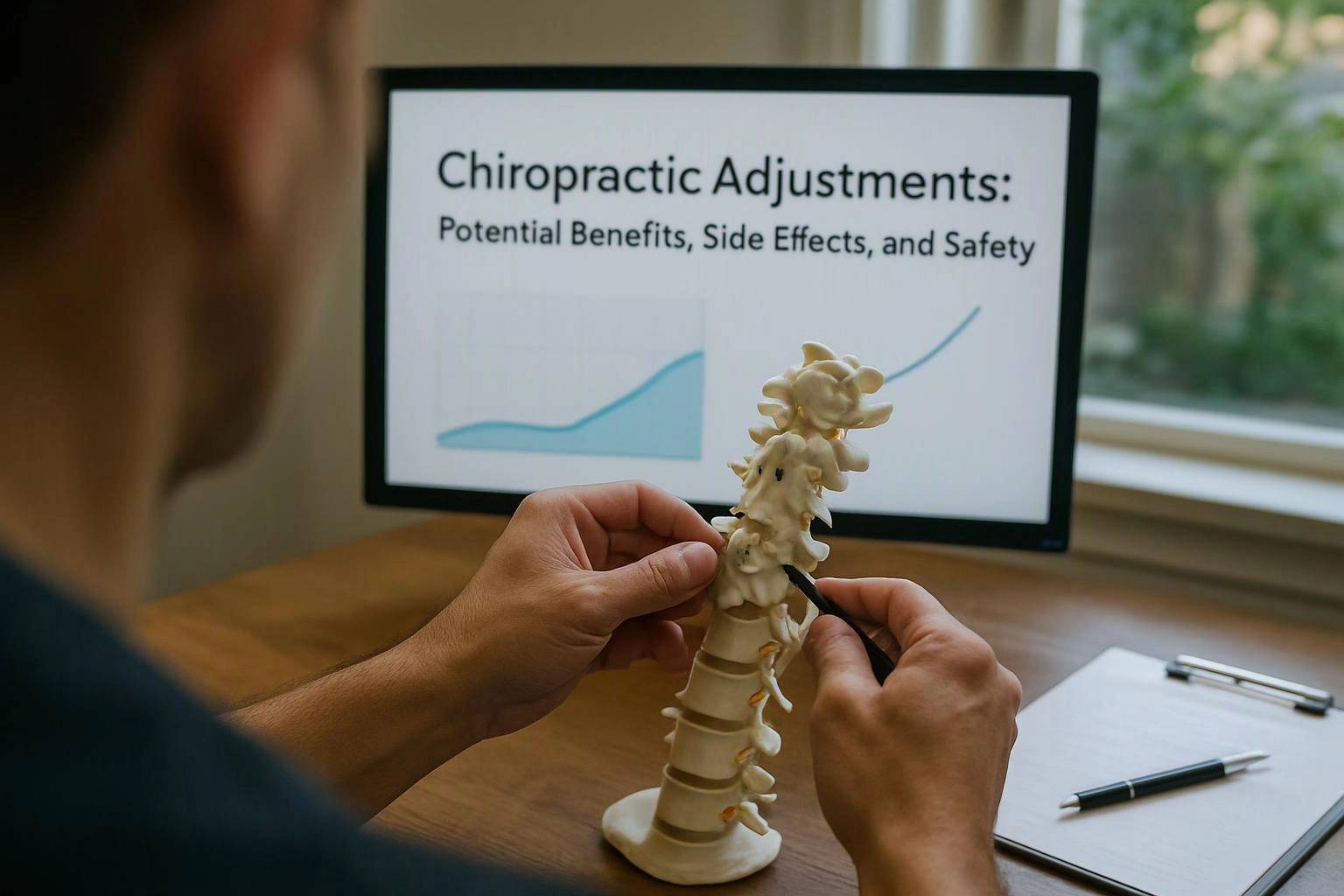
Common short-term changes may include muscle tenderness or a temporary change in symptoms. We want you to report adverse symptoms so we can review your response.
Is Chiropractic Treatment Safe?
Chiropractic treatment can be appropriate for many people, but safety depends on proper screening, suitable technique, and clear communication about symptoms.
Chiropractic safety starts with a review of your medical history and current symptoms. We use treatment screening to identify contraindications and decide whether an adjustment is suitable.
Informed consent means you understand the planned technique, possible benefits, and possible side effects before care. We pause and reassess when symptoms suggest that another medical evaluation is needed.
Who Should Discuss Risks Before an Adjustment?
People with serious health conditions, recent injuries, surgery, or unusual neurologic symptoms should discuss risks before receiving an adjustment.
We use these details to identify possible contraindications and decide whether to proceed, modify care, or recommend medical evaluation.
How We Review Your Safety and Treatment Options
We review your symptoms, health history, and goals before selecting an adjustment approach; we offer Free Consultations for this initial discussion.
What Can Change the Cost of an Adjustment?
Adjustment costs vary with the assessment, technique, care plan, and visit needs, so we explain what the quote includes before care begins.
The adjustment type can affect the resources and planning involved. Assessment needs, care complexity, and the number of visits in the treatment plan can also change the total cost.
We provide an exact quote after reviewing the care you may need. Ask us what the quote includes, such as the assessment, selected technique, and planned visits.
How to Decide Whether an Adjustment Fits Your Needs
A chiropractic adjustment may fit your needs when the proposed care matches your treatment goals, symptoms, and health history.
Discuss the expected benefits, possible side effects, and safety screening before choosing a chiropractic adjustment service. Ask why a specific adjustment technique fits your condition and what changes should prompt a pause.
Arrowhead Clinic Chiropractor Decatur can review these questions with you during a Free Consultation. Contact our team when you want to discuss whether care is a suitable next step.
Questions About Chiropractic Adjustment Safety
Can chiropractic adjustments help low back pain?
Arrowhead Clinic Chiropractor Decatur may use chiropractic adjustments for selected low back pain concerns when the assessment supports care. We review symptoms, movement, health history, and treatment goals before choosing an approach.
What should I do if pain gets worse after an adjustment?
Worsening pain after an adjustment deserves prompt attention, especially when symptoms are severe or unusual. Contact our team to report the change, and seek medical evaluation promptly when symptoms include neurologic changes or feel urgent.
Can I request a gentler adjustment technique?
Yes, you can request a gentler adjustment technique, and we can discuss options such as instrument-assisted adjustment or spinal mobilization. The selected method must still fit your symptoms, screening findings, and treatment goals.