A Checklist for Monitoring Symptoms After a Chiropractic Adjustment
Chiropractic adjustment aftercare helps you track changes after care, follow instructions, and know when to seek help. Arrowhead Clinic Chiropractor Decatur recommends contacting us about symptoms that concern you and seeking prompt medical evaluation for severe or rapidly worsening symptoms.
Request an EstimateWhat to Check Before a Chiropractic Adjustment
Before a chiropractic adjustment, share details that may affect your care. Our team uses this information to understand your needs and plan the visit safely.
Clear information gives us a better starting point. We can also explain what you may notice and which changes deserve a call.
How to Track Symptoms During the Visit
A chiropractic examination gives us a baseline for your symptoms and movement. You can help by describing changes in plain, specific terms.
We compare your report with the examination findings. This helps us decide whether your care plan needs attention or adjustment.
What to Do After a Chiropractic Adjustment
Chiropractic adjustment aftercare means following the instructions we provide and watching for meaningful changes. Your response can help guide follow-up care.
Post-adjustment soreness can be uncomfortable, but your care guidance still matters. Contact the chiropractor when symptoms concern you or do not follow the instructions we provided.
Which Symptoms Need Monitoring and Which Need Prompt Care?
Mild, short-lived soreness can be monitored, but severe, rapidly worsening, or unusual symptoms need prompt medical evaluation.
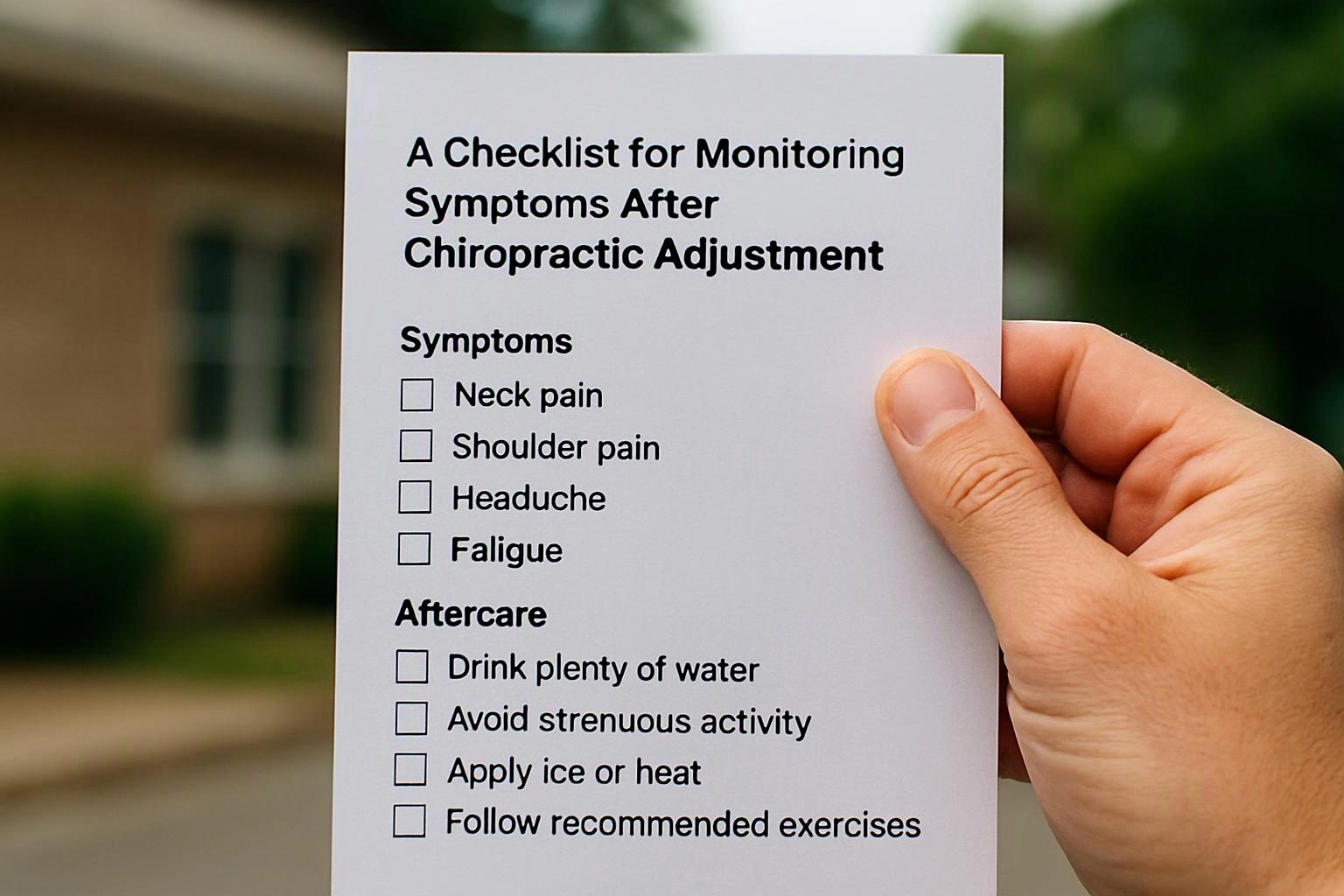
Use this comparison to decide what to record and what requires faster action. When you’re unsure, contact our team or seek medical care based on the seriousness of the symptom.
| Change after care | What to do |
|---|---|
| Post-adjustment soreness or muscle tenderness | Monitor the change and follow the care instructions provided. |
| Temporary symptom changes | Record what changed, when it began, and whether it improves. |
| Severe pain or rapidly worsening pain | Seek prompt medical evaluation. |
| Weakness, new numbness, or loss of coordination | Seek prompt medical evaluation, especially if symptoms progress. |
We can discuss soreness and other symptom changes during follow-up care. Severe or unusual symptoms need medical evaluation without delay.
Red Flags After a Chiropractic Adjustment
Red flags after an adjustment include sudden, severe, or progressive changes. These symptoms may need emergency medical care.
Do not wait for a routine follow-up when these warning signs appear. Seek emergency medical care when symptoms are severe or progressing.
When Should You Contact the Chiropractic Clinic?
Contact Arrowhead Clinic Chiropractor Decatur when symptoms concern you, worsen, or do not follow the care guidance we provided.
Call our team with questions about post-adjustment symptoms, soreness, pain changes, or follow-up care. We can review what you noticed and explain the next step based on your care plan.
Use our Chiropractic Adjustment service information to understand how adjustment care fits into a broader plan.
How Arrowhead Clinic Chiropractor Decatur Reviews Your Symptoms
Arrowhead Clinic Chiropractor Decatur reviews your patient history, symptom changes, and examination findings before guiding follow-up care.
Our team asks where symptoms began and how they changed after the adjustment. We also consider movement, pain, numbness, tingling, and weakness.
We use that review to shape or update your treatment plan. We then explain follow-up instructions in clear terms and answer your questions.
Continue Your Chiropractic Adjustment Care
Chiropractic adjustment care works best when you follow the aftercare plan and share meaningful symptom changes.
Keep your follow-up visit and bring your symptom notes when possible. Patient communication helps our team understand your response and guide the next part of care.
Contact Arrowhead Clinic Chiropractor Decatur when you need clarification about your adjustment, aftercare plan, or follow-up instructions.
Questions About Symptoms After a Chiropractic Adjustment
Can soreness after a chiropractic adjustment be normal?
Yes, mild soreness after a chiropractic adjustment can be monitored when it follows the care guidance provided. Arrowhead Clinic Chiropractor Decatur can review soreness that concerns you, worsens, or does not improve as expected.
What should I record after a chiropractic adjustment?
Record symptom location, pain changes, movement changes, numbness, tingling, weakness, and when each change began. These notes help our team review your response during follow-up care.
Can I return to normal activities after a chiropractic adjustment?
Daily activity should follow the chiropractic instructions provided for your care. Avoid activities that clearly worsen symptoms, and contact our team if your activity guidance is unclear.
When should I seek emergency care after a chiropractic adjustment?
Seek emergency care for severe or rapidly worsening pain, progressive weakness, new numbness, or loss of coordination. Prompt medical evaluation is important when symptoms are unusual or progressing.
Related Resources
How to Check Chiropractic Insurance Coverage Before You Book
Compared ToHow to Choose a Chiropractor: Questions to Ask Before You Book
Compared ToChiropractic Packages vs. Individual Visits: What to Compare
Types & CategoriesChiropractic Adjustments: Potential Benefits, Side Effects, and Safety