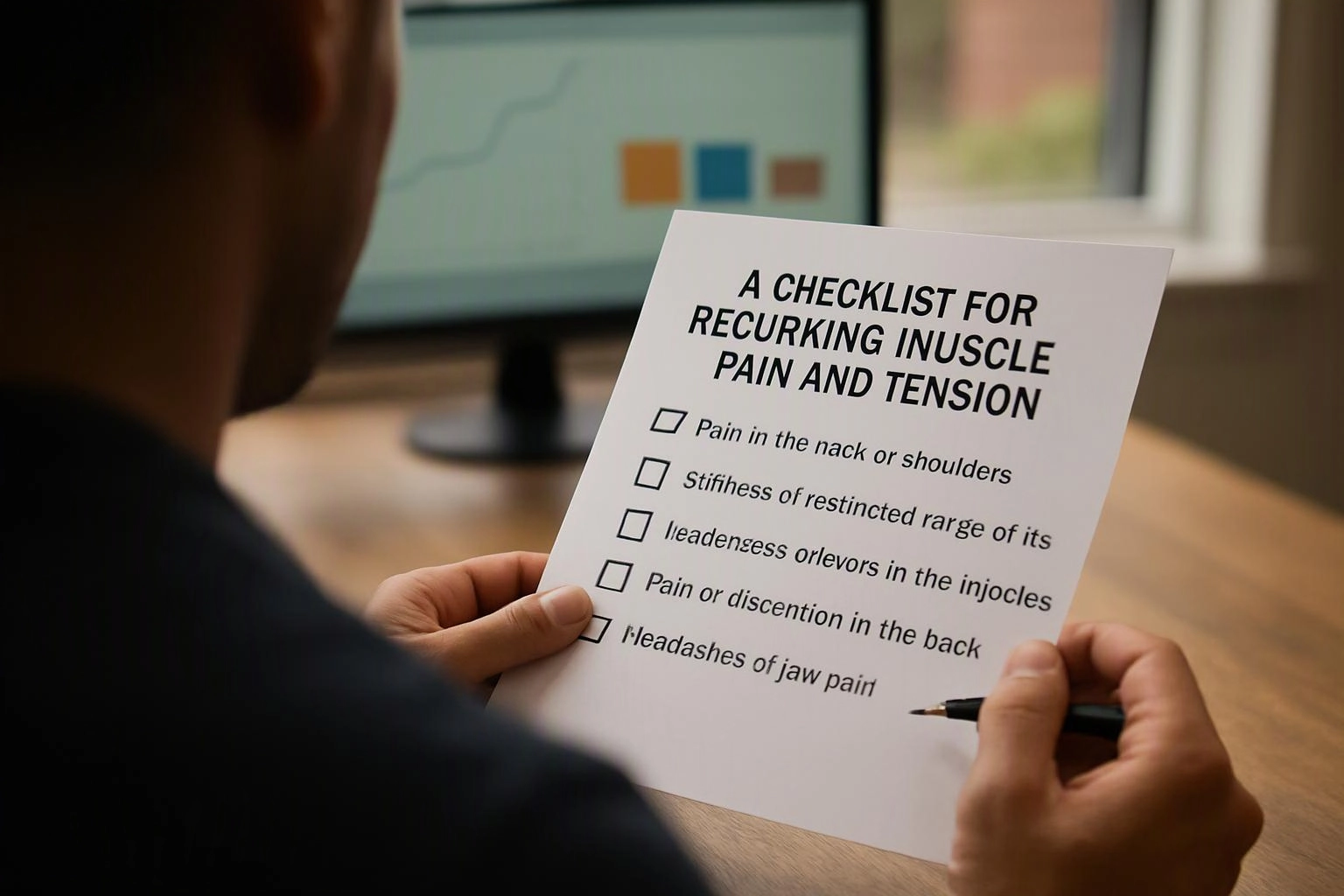
A Checklist for Recurring Muscle Pain and Tension
A muscle pain and tension assessment checklist tracks location, timing, triggers, relief, and warning signs before care. Arrowhead Clinic Chiropractor Decatur uses these details to guide a safer discussion about massage options.
Request an EstimateWhat to Record About Recurring Muscle Pain and Tension
Recurring muscle pain is assessed with a symptom, activity, safety, and massage-planning checklist. Start by noting where the discomfort appears, how it feels, and when it returns.
Record whether the issue feels like muscle soreness, body tension, or stiff muscles. Note related symptoms such as neck tension, shoulder tension, back pain, hip tightness, or leg soreness.
Also track pain triggers and relief. Posture, sleep position, physical activity, repetitive tasks, stretching, rest, and movement can all shape the pain pattern.
Before Your Assessment: Record the Pattern
Before an assessment, written notes can show how symptoms connect with daily habits. Bring clear details about your activity level and changes in comfort.
These notes help us see whether the symptoms follow a clear pattern. They also give us useful context before we discuss massage options and precautions.
Which Activities Make the Pain Better or Worse?
Activities can make muscle pain or tension better or worse, so record the movement, posture, or rest pattern linked to each change.
Physical activity may increase symptoms when it involves lifting, repeated effort, or an unfamiliar demand. Sitting posture and repetitive tasks may also add strain, especially when one position lasts too long.
Record what happens during stretching, rest, and normal movement. We use these details to understand whether symptoms respond to gentle activity, reduced activity, or changes in posture.
If you want more information about our approach, see our Therapeutic Massage service page.
During Your Assessment: Explain the Symptoms Clearly
During an assessment, clear symptom descriptions help us plan a safer conversation about care. Include changes that affect daily movement or comfort.
We compare your symptom pattern with your activity history and health history. We also note changes that may affect massage pressure or care planning.
When Should Muscle Pain Be Checked Before Massage?
Muscle pain needs medical attention before massage when it includes sudden weakness, new numbness, severe swelling, or fever.
These warning signs can point to a problem that needs medical evaluation first. Acute injury also needs careful screening before massage care.
We use these red flags to decide whether massage discussion is appropriate. Seek medical attention promptly when these symptoms are severe, sudden, or worsening.
After Your Assessment: Prepare for the Next Step
After an assessment, organized notes help you make a clear plan for the next step. Keep track of what changes and what questions remain.
Our team reviews these details with you before discussing massage choices. Your notes can also help us adjust the discussion when symptoms change.
What Should You Discuss Before Choosing a Massage Type?
Discuss your symptoms, pressure preference, activity demands, health history, and treatment goals before choosing a massage type.
Therapeutic Massage may fit a general plan focused on muscle tension and comfort. Sports Massage may better match training demands or repeated physical activity.
Deep Tissue Massage involves deeper pressure, so pressure preference and tenderness matter. We consider your pain location, range of motion, health history, and treatment goals before discussing an option.
Tell us what pressure feels useful and what feels uncomfortable. Your response during care can guide safer care planning and future adjustments.
How Our Massage Options Relate to Your Checklist
Massage options relate to your checklist through the symptom pattern, activity demands, pressure preference, and treatment goals. The table below shows what to discuss with our team.
| Massage option | Checklist connection | Questions to discuss |
|---|---|---|
| Therapeutic Massage | General muscle tension, recurring aches, and comfort goals | Which areas feel tense, and what pressure feels comfortable? |
| Sports Massage | Physical activity, training demands, and repetitive tasks | Which activities increase symptoms or limit movement? |
| Deep Tissue Massage | Persistent tightness, tenderness, and preference for deeper pressure | Are there tender areas, health concerns, or massage precautions? |
Our team uses the checklist to connect your symptoms with your goals. We don't treat recurring tension as a generic soreness complaint.
Questions to Bring to Your Massage Discussion
Bring questions that clarify the massage assessment, treatment goals, pressure level, and care planning. Clear questions also help us identify contraindications before care.
Ask how your pain response may guide pressure changes. Ask which symptoms should be reported during care and how to track changes afterward.
Ask how your health history, activity level, and pain location affect the discussion. We can then explain the available options in a way that fits your symptoms and goals.
Questions About Recurring Muscle Pain and Tension
Can repetitive physical tasks contribute to muscle pain or tension?
Yes, repetitive physical tasks can contribute to muscle pain or tension by repeatedly loading the same muscles. Arrowhead Clinic Chiropractor Decatur reviews those tasks, along with posture and activity level, during the assessment.
What information should I write down before a massage assessment?
Write down your pain location, symptom onset, frequency, triggers, relief patterns, daily activities, sleep position, and health history. Include range of motion changes, radiating pain, numbness, tingling, or other warning signs.
Can massage help every type of recurring muscle pain?
No, massage isn't appropriate for every type of recurring muscle pain. Red flags, acute injury, sudden weakness, new numbness, severe swelling, or fever require medical attention before massage discussion.
Bring your checklist to Arrowhead Clinic Chiropractor Decatur so we can discuss your symptoms, precautions, and treatment goals. Contact us to request a consultation and review the next step.
Get a Free Estimate